
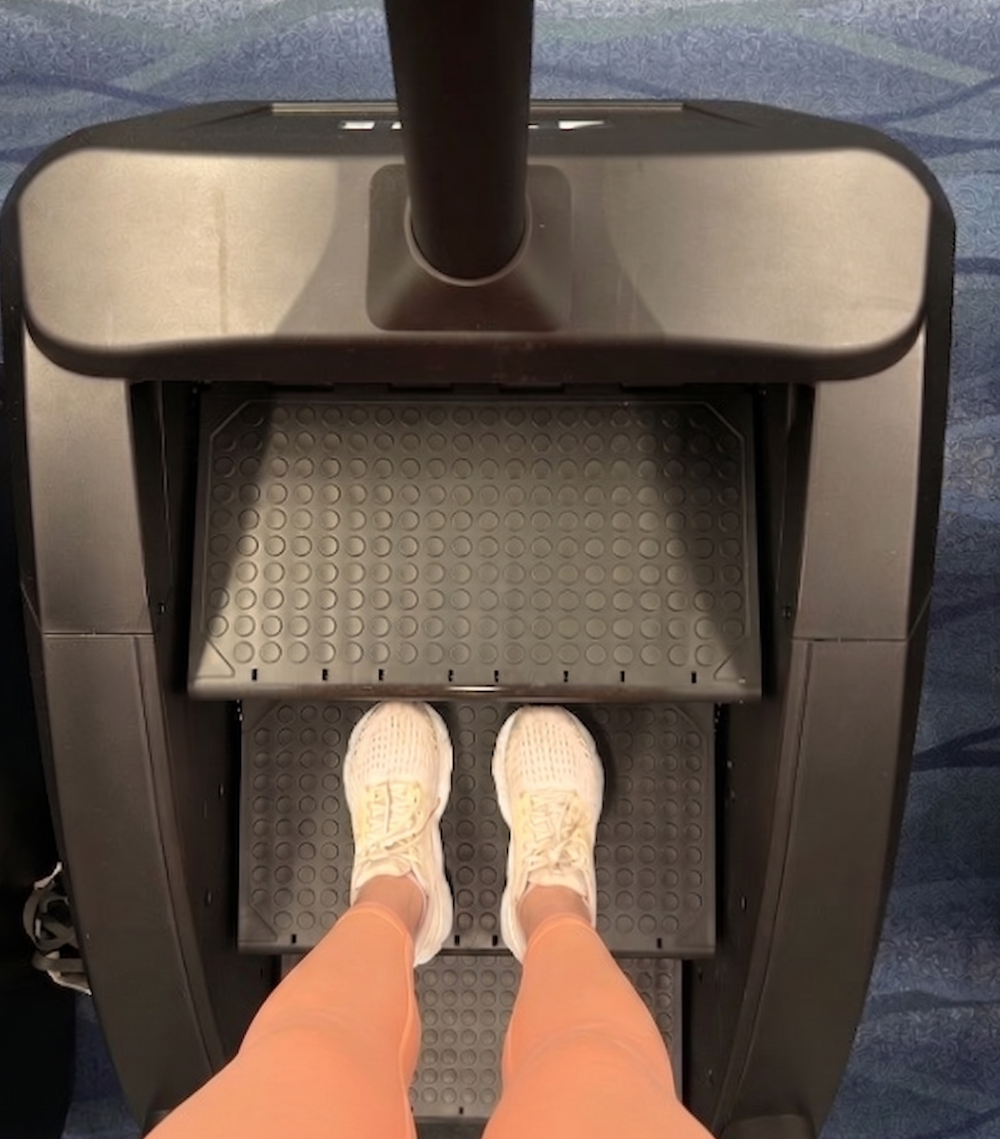
I work on the fourth floor. I made one rule: if I was not carrying something heavy and I was not late, I took the stairs up at least once a day. Some days I took them every time.
My legs did not transform. My VO2 max did not double. What changed was confidence — proof that I could choose the slightly harder default and survive a boring workweek.
What surprised me
It was easier to stack other small habits once this one felt normal. The stairs became the gateway, not the whole program.
Knees, breath, and the ego hit on floor eight
I took the first week slow on purpose: one flight at a comfortable pace, hand on the rail if needed. By week two I could talk in short sentences by the top without sounding like I was drowning. I never sprinted the stairs — this was not HIIT cosplay; it was daily movement I could repeat angry, tired, or late.
If my knees complained, I skipped a day going up and took the elevator without guilt. Consistency beats martyrdom. A month later they complained less, which I credit to gradual volume more than anything heroic.
How I kept the streak boring
I tied the habit to arrival, not motivation: first time I enter the building for the day, stairs unless I am carrying something unwieldy or genuinely sprinting to a hard start time. No debate in the lobby. The decision was already made.
On work-from-home days, I substituted a single trip up and down my apartment stairs before coffee. Not the same as four flights, but the identity stayed intact: I am still someone who chooses the harder default sometimes.
Thirty days later
I did not become a different human. I became someone who trusts small commitments again — which turned out to matter more than any single metric on a watch.